


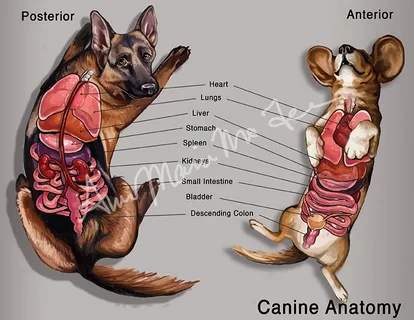
Collagen is not a single-purpose “joint ingredient”. This family of structural proteins occurs across a dog’s cartilage, tendons, ligaments, skin and bone. That distribution explains the versatile marketing, but does not prove that eating any collagen product changes every collagen-containing tissue.
Owners need two maps before buying: an anatomy map showing where different collagen types occur, and an evidence map showing what canine research has actually tested. Keeping those maps separate makes transparent labels more useful than whole-body promises.
The Anatomy Map at a Glance
Connective tissues share structural components but perform different jobs. Treating them as interchangeable leads to poor buying decisions.
TissueMain roleRelevant collagen contextWhat an owner may noticeWhat a supplement cannot establishArticular cartilageProvides a smooth, load-distributing joint surfaceType II is a principal collagen in its frameworkStiffness, altered gait or reluctance to move may occur, but are not specific to cartilageThe cause of lameness or whether cartilage has been repairedTendonsConnect muscles to bones and transfer forceType I predominates in tensile fibre bundlesPain, swelling or reduced willingness to load a limbHealing of a tendon injuryLigamentsConnect bones and help guide or stabilise jointsType I is prominent in the organised fibre structureInstability, pain or sudden lameness after injuryRestoration of ligament stabilitySkinProvides a flexible external barrierTypes I and III contribute to the dermisItching, redness, hair loss or altered coat appearanceThe cause of dermatological signs or a proven coat responseBoneProvides support, leverage and mineral storageType I forms much of the organic matrix that is mineralisedPain, deformity or reduced use after injuryGreater bone strength or fracture healing
This is an anatomy map, not a list of indications. The presence of collagen in a tissue and evidence for an oral supplement are different facts.
Cartilage: A Specialised Joint Surface
Articular cartilage covers the ends of bones in synovial joints. Its extracellular matrix includes water, proteoglycans and a collagen network in which Type II is a major component. The tissue has limited intrinsic healing capacity, and visible stiffness can have sources beyond cartilage change.
Undenatured Type II collagen has been studied in dogs with osteoarthritis and in structured exercise models. Selected trials report differences in pain, gait or biomarker outcomes. Those findings belong to specified ingredients, populations and protocols; they are not evidence that any product labelled “Type II” treats arthritis or rebuilds cartilage.
Tendons: Force-Transmission Cables
Tendons attach muscles to bones. Their aligned, Type I collagen-rich fibres transmit force, but function also depends on cells, blood supply, loading history and surrounding anatomy. Injury may require examination, imaging and individual rehabilitation.
Recognising collagen as a tendon component is sound. Claiming that an oral product repairs torn fibres or speeds healing is not justified without suitable clinical evidence. Sudden pain, swelling or altered limb use is a veterinary question.
Ligaments: Stability Depends on Organisation
Ligaments connect bone to bone and help control joint motion. They contain abundant Type I collagen, yet a supplement does not mechanically stabilise an injured knee. Management may involve weight control, pain management, rehabilitation or surgery.
A formulation can clearly disclose Type I collagen. It cannot diagnose a ligament injury, restore joint stability by itself or replace an orthopaedic plan.
Skin: Collagen Is Only Part of the Story
Types I and III contribute to the dermis, but skin and coat changes can arise from parasites, allergy, infection, endocrine disease or incomplete nutrition. Human cosmetic research does not validate a canine supplement. Without canine trials, visible coat or skin claims should remain cautious.
Persistent itching, redness, odour, sores, hair loss or recurrent ear problems warrants veterinary attention. A supplement should not delay testing for a cause that may need targeted care.
Bone: A Mineralised Living Composite
Bone combines a Type I collagen-rich organic matrix with mineral and responds to age, hormones, loading and complete nutrition. Puppies require carefully balanced growth diets, while pain or a suspected fracture requires diagnosis. Collagen’s presence in bone does not show that a supplement increases bone density, prevents fracture or accelerates healing.
The First Buying Decision: Read Beyond “Collagen”
The useful front-of-pack question is not simply “Does this contain collagen?” but “Which forms, from what sources, and how clearly are they disclosed?” Owners reviewing multi-type collagen options for dogs should compare named types, processing form, animal sources, serving information and every additional active or inactive ingredient.
A label that says only “collagen blend” hides information needed for comparison. “Hydrolysed Types I and III collagen” and “undenatured Type II collagen” identify materially different inputs. Clear wording cannot guarantee an outcome, but it allows the buyer and vet to understand what is being considered.
Hydrolysed and Undenatured Are Not Synonyms
Hydrolysed collagen has been processed into smaller peptides. Types I and III can be supplied in this form. Undenatured Type II is processed to preserve native structural features. It should not be treated as a differently worded version of hydrolysed collagen; its proposed biological rationale and the quantities used in ingredient research differ.
Label termWhat it describesLegitimate comparison pointWhat it does not proveHydrolysed collagenCollagen broken into smaller peptidesCollagen source, type and declared amountThat a liquid is better absorbed than every powder or chewUndenatured Type IIType II retaining native structural featuresA clear distinction from hydrolysed peptidesArthritis treatment or cartilage regrowthMulti-type formulaMore than one named collagen typeBreadth and transparency of compositionBetter clinical results than every single-type formulaLiquid deliveryA measurable fluid formatEase of mixing and routine fitInherent bioavailability or faster resultsWhat the Canine Studies Actually Show
Research is more informative when the ingredient, population, outcome and limitations remain attached to the result.
A 2012 trial followed client-owned dogs with moderate arthritis for 150 days. Four treatment groups contained only seven to ten dogs each. Dogs receiving a specific undenatured Type II ingredient improved on selected observational pain scores, and that group alone showed significant changes in the reported force-plate measures. The small groups and defined preparation make this encouraging ingredient evidence, not proof for every Type II or multi-collagen product.
In a 2024 double-blind, placebo-controlled study, 41 privately owned dogs with osteoarthritis entered and 31 completed a 12-week intervention. One specific bioactive collagen peptide preparation improved several force-plate gait measures and owner-rated quality of life, while accelerometer-recorded activity did not improve. The manufacturer funded the study; an employee and collagen-peptide patent interests were disclosed. That does not erase the findings, but it is relevant when judging certainty and independence.
A 2021 exercise study sorted 40 healthy Labrador Retrievers into undenatured Type II and placebo groups. It found selected differences in activity, blood measures and biomarkers during a prescribed running programme. Blood sampling at only one point after exercise was a stated limitation, and the ingredient manufacturer funded the work. Biomarker movement is not direct proof of injury prevention or cartilage preservation in pet dogs.
A 2025 narrative review described canine evidence for collagen hydrolysates as promising but preliminary. It highlighted varied preparations, inconsistent methods and outcome measures, and the need for stronger placebo-controlled trials and more canine bioavailability work. That assessment is useful because it explains why broad claims about tendons, ligaments, skin and bone run ahead of direct canine evidence.
Use an Evidence Ladder, Not a Marketing Leap
Evidence for a product claim can sit on very different rungs:
- Tissue biology: establishes a structural role, not a supplementation result.
- Laboratory work: can suggest a pathway but cannot reproduce a pet dog’s full response.
- A canine ingredient study: is more relevant, but its result belongs to that ingredient, population and protocol.
- Independent replication: in larger, diverse groups increases confidence; current literature remains limited.
- A finished-formula trial: most directly supports claims about a particular product.
Ingredient research does not automatically validate a finished blend because composition, serving, manufacturing and interactions differ. Without a finished-product trial, the strongest defensible claims concern composition, label clarity, convenience and cautious nutritional support.
Where Pure Majesty Pets Fits
The Pure Majesty Pets liquid multi-collagen formula combines hydrolysed Types I and III with undenatured Type II and names 11 active ingredients. It can be measured and mixed with food, which may suit dogs that reject tablets or chews.
This provides three concrete comparison points: three identified collagen types across two materially different forms, an inspectable multi-active panel and a measurable delivery format. A single-form product or unspecified proprietary blend does not disclose the same architecture.
That is a compositional advantage, not a clinical guarantee. No head-to-head trial of the finished Pure Majesty Pets formula currently proves better absorption, faster change, tissue repair or superior outcomes over every competitor. The factual commercial case is stronger without those leaps: buyers can see what the formula contains, distinguish the forms and choose a format compatible with daily feeding.
Eleven Named Actives: Transparency, Not a Numbers Contest
A list of 11 named actives provides more information than an unnamed proprietary total. It lets owners and vets screen animal sources, overlapping supplements and possible sensitivities. Ingredient count alone is not potency, and a longer panel cannot compensate for unclear serving directions.
The advantage is inspectability. Review the complete label, including flavourings, broths, oils, preservatives and animal-derived ingredients, especially for a dog with food allergy, gastrointestinal disease or other supplements already in use.
Five Myths That Distort the PurchaseMyth 1: Collagen’s presence means supplementation improves the tissue
Correction: Presence establishes biological relevance, not a clinical outcome. Canine evidence is particularly limited for tendon, ligament, skin and bone claims.
Myth 2: Liquid collagen is automatically absorbed better
Correction: Liquid is a delivery format. It can be measured and mixed easily, but the format alone does not establish superior bioavailability over every powder, capsule or chew.
Myth 3: Hydrolysed and undenatured collagen are interchangeable
Correction: Hydrolysed collagen consists of smaller peptides; undenatured Type II retains native structural features. A useful label identifies them separately.
Myth 4: More collagen types guarantee better results
Correction: A multi-type formula offers broader disclosed composition. Suitable head-to-head finished-product research would be needed to prove superior clinical performance.
Myth 5: A supplement can replace veterinary joint care
Correction: A supplement cannot diagnose lameness, stabilise an injured ligament or prescribe rehabilitation. Mobility care may also involve weight management, controlled exercise, home adaptations and veterinary treatment.
Choose a Format the Dog Will Actually Take
A precisely labelled product offers little value if the dog refuses it. Chews can suit willing dogs, powders mix into food, capsules are premeasured, and liquids allow measurement and mixing when directions are clear.
Every format still requires a check for flavourings, animal sources and allergens. Convenience can support consistency; it does not prove biological superiority. Note missed or partial servings before interpreting any change.
Introduce and Observe Without Creating a Home Trial
Before starting, record the dog’s food, medicines, supplements, appetite, stool and ordinary movement. Change one major variable at a time; multiple simultaneous changes make observations hard to interpret.
Follow the label and veterinary guidance. Do not improvise an amount from a human product or another dog’s routine. Confirm that the complete serving is eaten and watch for vomiting, diarrhoea, unusual itching, facial swelling or marked lethargy.
For mobility, observe ordinary tasks rather than creating a strenuous test. Note rising after rest, walking on the same surface and behaviour after a familiar route. Consistent videos can help a vet identify patterns.
There is no responsible universal timeline for a result. Studies use different materials, dogs, conditions and endpoints. A promised transformation by a fixed date is not an evidence-based guarantee.
Know When the Supplement Question Comes Second
Contact a vet about persistent stiffness, recurring lameness, difficulty rising, changed posture or unexplained behavioural change. Do not assume these signs are normal ageing or a collagen deficiency.
Seek prompt care for sudden inability to bear weight, severe pain, marked swelling, an obvious injury, weakness, collapse or loss of coordination. A supplement should never delay assessment of a possible fracture, ligament rupture or neurological problem.
Veterinary review is also sensible before supplementation when a dog is pregnant or nursing, takes prescription medication, has chronic kidney, liver or gastrointestinal disease, or has significant food allergies. Never reduce prescribed pain medication because the dog appears better after starting a supplement.
What an Evidence-Aware Purchase Looks Like
A defensible decision does not require stronger science than exists. Choose a product because it identifies collagen forms, discloses its active ingredients, provides usable directions, fits the feeding routine and avoids excessive claims.
The connective-tissue map leads to a precise conclusion. Collagen belongs biologically in cartilage, tendons, ligaments, skin and bone, but oral supplementation evidence is not equally strong across that map. Pure Majesty Pets is factually differentiated by hydrolysed Types I and III, undenatured Type II, 11 named active ingredients and measurable liquid administration. Those verified characteristics support an informed purchase without promising repair, cure or guaranteed change.
References
Gupta RC, Canerdy TD, Lindley J, et al. “Comparative therapeutic efficacy and safety of type-II collagen, glucosamine and chondroitin in arthritic dogs: pain evaluation by ground force plate.” Journal of Animal Physiology and Animal Nutrition. 2012;96(5):770–777. DOI: 10.1111/j.1439-0396.2011.01166.x. PMID: 21623931.
Dobenecker B, Böswald LF, Reese S, et al. “The oral intake of specific Bioactive Collagen Peptides improves gait and quality of life in canine osteoarthritis patients.” PLOS ONE. 2024;19(9). DOI: 10.1371/journal.pone.0308378. PMID: 39298537.
Blees NR, Teunissen M, Dobenecker B, et al. “Collagen Hydrolysates as Nutritional Support in Canine Osteoarthritis: A Narrative Review.” Journal of Animal Physiology and Animal Nutrition. 2025;109(2):590–600. DOI: 10.1111/jpn.14076. PMID: 39604106.
Varney JL, Fowler JW, Coon CN. “Undenatured type II collagen mitigates inflammation and cartilage degeneration in healthy Labrador Retrievers during an exercise regimen.” Translational Animal Science. 2021;5(2). DOI: 10.1093/tas/txab084. PMID: 34124592.
Merck Veterinary Manual. “Components of the Musculoskeletal System in Dogs.” Updated September 2024.
Veterinary disclaimer: This article provides general educational information and does not diagnose, prevent or treat disease or injury. Consult a veterinary surgeon about pain, lameness, skin disease, suspected tissue injury, chronic illness, medication use, food allergy or supplement suitability.