


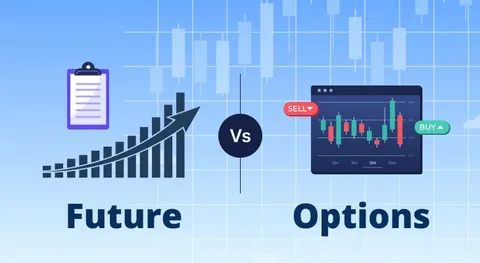
One of the biggest areas of confusion for any newcomer to trading is whether stock options are superior over futures options and vice versa. Both are derivatives, whereas both can serve as powerful tools for anything from hedging to speculation. However, both occupy very different ecosystems and behave in their unique ways. These differences must be well understood, especially for the stars beginning futures trades.
Stock Options: The Basics
A stock option is a contract that gives you the right to buy—call option—or sell—put option—a company’s stock under a fixed amount and before a specified expiration date. If you believe Apple stock is going to climb up in the next three months, you become a buyer of a call option. When in three months time the stock rises above your strike price, you get to cash in; on the other hand, if the stock declines, your maximum loss would amount to the premium you paid.
The option for stocks for the retail investors is one of the most popularly traded options. Further, because these options involve surnames of companies that are known around and from an informative point of view, stock options also remain popular. Generally speaking, given a trader’s prior experience in stock trading, it is easier for him or her to trade with stock options.
Futures Options: Definitely Not a Different Playground
Options on futures, on the other hand, do not involve purchasing or selling shares of a company. They are instead linked to futures contracts for future delivery or sale of commodities, indices, or currencies. Practically speaking, futures option trading is the purchase of the right to trade on the futures contract.
Assuming the view that prices for crude oil may certainly be on the rise, one buys the call options on oil futures. In the event oil prices rise, your options appreciate; you may either exercise your options or simply sell them for profit. Alternatively, if oil prices go down, you lose only the premium you have paid.
Differences between Stock Options and Futures Options
1. Underlying Asset
Stock options: Attached to a company’s stock.
Futures options: Attached to futures contracts on commodities, currencies, or indices.
2. Market Reach
Stock options: Allows a trade only in equity markets.
Futures options: Gives exposure to global markets in energy, metals, agriculture, and financial benchmarks.
3. Risk and Volatility
Stock options: The risk is company-specific.
Futures options: Changed by factors such as global supply and demand, geopolitical events, and economic data, making them very volatile.
4. Settlement
Stock options: May settle in actual shares.
Futures options: Generally offer settlement in futures contracts or in cash.
5. Leverage
While both offer provision for leverage, it is the futures options that will offer exposure to much larger markets with relatively low capital requirements.
Which Is Better for Beginners?
If you are just beginning, the choice will depend on your comfort and market knowledge.
Stock options may feel more familiar if you actively track the stocks of companies. They are generally less volatile than commodities on the global level.
Futures-options trading, however, allows exposure to a much wider array of opportunities such as oil, gold, wheat, or currencies. For traders keen on studying global markets, this could be more rewarding.
Myth or Fact?
Newcomers consider futures options too advanced. Although they require more knowledge, they allow for starting small and managing risk efficiently.
Some think futures options are for the pros only. Brokers have educational resources for the support of futures options trading for beginners.
Things to Think About Before You Decide
Find out your interest: do you prefer to track stocks or global commodities?
Understand margin requirements: futures markets can be quite leveraged, so make sure you have a rock-solid risk management plan.
Practice on a demo account to figure out how both types of options behave in different market conditions.
Conclusion
Stock options and futures options are important but are not the same. Stock options may provide a delegate entrance for equity traders while futures options widen your reach over global commodities. This can lead to fun in futures trading for beginners when one tries their hand at futures options, which is when one really wants to limit risk, enjoy the fun, and expand markets.
